Thursday, July 1, 2010

2010 Honda VFR1200F DCT Specifications


2010 Honda VFR1200F DCT Specifications:
Engine: Liquid-cooled 1237cc 76-degree V-Four
Bore x Stroke: 81.0 x 60.0mm
Compression Ratio: 12.0:1
Fuel Delivery: Fuel-injection
Transmission: 6-speed
Final Drive: Shaft
Frame: Twin-spar aluminum
Front Suspension: 43mm Showa inverted fork, 3-way adjustable for spring preload, compression and rebound damping, 4.7 ins. travel
Rear Suspension: Showa gas charged shock, 3-way adjustable for spring preload, compression and rebound damping; 1.5 in travel
Front brakes: 320mm discs with six-piston Nissin calipers w / ABS
Rear Brake: 276mm disc w / two-piston caliper, ABS Linked
Front Tire: 120/70-17 Dunlop Sportmax Roadsmart
Rear Tire: 190/55-17 Dunlop Sportmax Roadsmart
Wheelbase: 60.8 ins.
Rake: 25.3 deg. Trail: 4.0 ins.
Seat Height: 32.1 ins.
Fuel Capacity: 9.4 gal.
Curb Weight: 614 lbs.
MSRP: $ 17.499
2010 Honda VFR1200F DCT

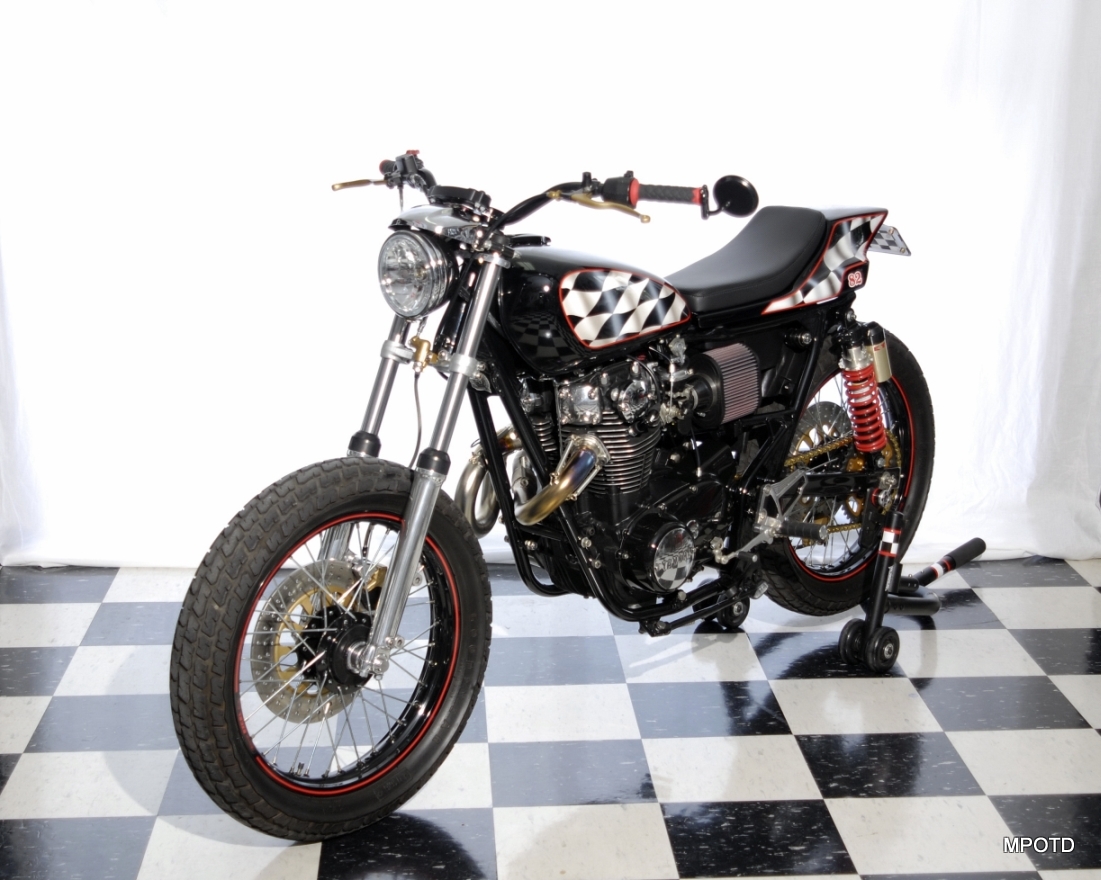
Reader Ride. Possibly The Nicest XS650 Street Tracker I've Seen Yet.

Folks are making this really easy for me. I'm getting quite a flood of outstanding pics lately so if you're bike isn't getting on right away doesn't mean that it won't. I'm NOT complaining so please keep em coming.

Ken Fontenot of Cycle Sports Huston sent in this jewel of a build. As XS trackers go, I don't believe I've seen it equaled.

Ken Writes:

I read that you were always looking for interesting bikes to post to your site. Here is a bike we built over the winter months. Several pics attached as well as a story about how it all happened.
Everyone knows things have slowed down a little in the motorcycle business lately as well as many other businesses so this past winter we decided to take on a project to occupy any down time we might have.
We have had an independent shop here in Houston Tx for the last 29 years and have worked on several Flat trackers and Street trackers in the past and everyone here liked that style so after looking around we pulled out a rusty 1975 Yamaha XS650 rolling chassis that had been outside for about 16 years.
We had a starting point. We tried to accomplish this by using as many parts as possible that we already had around the shop, simply refinishing, replating, repainting and restoring. Well after about 6 months this is what we came up with. Its a real conglomeration of parts from many different bikes that we made work.

* Frame is a 1975 Yamaha XS650, gusseted and modified
* Engine & carbs are from a '77, Both left stock but painted polished & carbs rejetted
* Front suspension & fuel tank '81, steering stem bearings,seals & progressive springs
* Swingarm '86 Yamaha Radian with needle bearings
* Kaw ZRX 1200 Shocks, Repainted and re cadium plated
* Foot controls are Kawasaki Ninja 250
* Tailpiece XR750 Harley, seat recontoured , firmer foam inserted and recovered
* Tailpiece is also rubber mounted to the frame on viabration absorbing Iso mounts
* Headlight & Brow from a Harley Sportster, custom mounts made
* K&N Air Filters with custom adaptors made to mount to the carbs
* Pipes were built down the street from us by John Easton at Jemco Exhaust Systems
* Stock front caliper and rotor with Grimeca mastercyl & stainless lines
* Brembo Rear caliper with custom water jetted hanger and stabalizer bar, stainless lines
* Stock front brake rotors turned, drilled & painted
* For the wheels we used two stock front Xs650 hubs & Spokes
* Custom built billet sprocket adaptor made by James Moody at Leeco Springs
* The Rims are rear Honda CRF450 Excell 19" take offs donated by Honda of Houston
* Paint scheme graphics were designed by Shane Davis at Graphtec Inc in Houston
* All paint was done here in our shop, the only powdercoated parts are rims and fuel cap
* Trailtech computer for speedo, tach, odometer, tripmeter, clock, temp, shift lights
* Trailtech also has an optional bezel with all the idiot lights needed, rubber mounted
* We custom built the turn signals and lic plate & taillight brkt.
* Hard to spot the front signals but they are there
* Custom built the electrical box and wiring harness.
* Hi performance YTZ10s sealed battery, electric start only.
* All lighting is LED except for H4 Quartz headlight.

This has been a very fun project and of course we ended up spending more time that we expected but we are very proud of the final result. Considering we have spent very little (under $1800) in actually parts & supplies, this bike runs, handles, stops, and rides exceptionally well and really turns heads where ever we park it.

Ken Fontenot, Jeff Wisenbaker & Ben Brooks
Cycle Sports Ltd of Houston
9802 Clay Rd
Houston, Texas 77080
713-690-9802
www.cyclesportshouston.com


Triumph Tiger 90

.


1963,

First Year of production, Engine Frame Numbers H29733-H32464
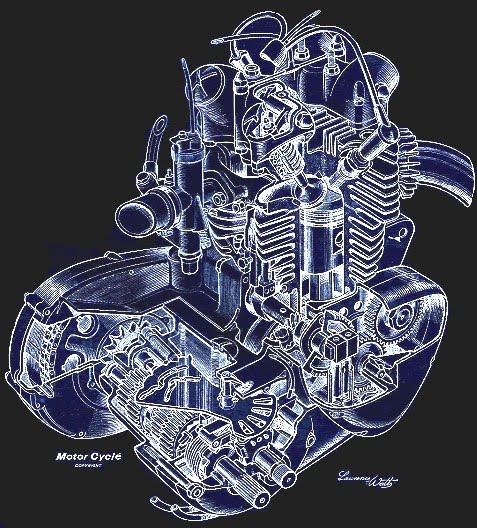
350cc Unit construction twin engine with ignition timing operated from the exhaust camshaft, the Lucas 4CA points and condensers being accessible behind a chromed cover on the timing case. Early machines up to H30593 were fitted with an incorrectly operating advance mechanism, which was rectified under warranty.
The cylinder head features the modified bolts introduced to the C range From H29151 while engines after H30790 have E1771 timing pinions.
The single tube frame has the petrol tank acting as a stressed member. These early machines often suffered with tank fractures, repairs usually being carried out under warranty, Triumph fitting the frame brace and four-bolt petrol tank fitted as standard to the 1965 model. I have seen several machines modified in way. (Illustrated in The Motor Cycle 8th October 1964)


The Forks are the internal spring type with narrow gaiters, distinctive spindle caps and the early type shroud/headlamp support, which do not have the slotted boltholes to attach the headlamp. The chromed fork top nuts have a flat profile while the steering stops are extended fasteners attached to the fork. Look for Motor Cycle 12th January for a detailed overhaul article with an excellent illustration.
The aluminium front mudguard is supported by a brace underneath between the forks and a single stay to the front. The plain number plate is located here; original embossed number plates have a distinctive style of script.
The Rear Mudguard may show a distinctive raised centre moulding if so it has an attractive sweep at the rear. The mudguard bridge support is brazed/welded to the mudguard and painted in the overall scheme (Motor Cycle 23rd May 1963), It is likely the pattern of the mudguard changed during 1963 to the later form without the moulding.
Both mudguards have sharp edges where they start and finish while the stay fastenings are slightly domed (1/4in dsv7).


The wheels have full width hubs the front painted silver the rear black. Changes from the 62 ‘C’ range include Grease retaining seals inboard of the wheel bearings.
A quickly detachable rear wheel is often fitted though it is an option. Both hubs are laced with 18 inch Dunlop WM2 Rims shod with 3.25 front and 3.5 rear tyres. The original Dunlop tyres are similar in pattern to current Avon Speedmasters, (no longer available in this size)
The brakes are 7 inch single leading shoe non vented type, for the front brake the cable stop is on the fork adjacent to the hinged lower mudguard stay, which is able to act as a prop to aid wheel removal, the fasteners here are specialised. The chrome plate on the hub features a circular moulding. The rear drum incorporates the drive sprocket (46 Teeth). The rear brake adjuster has four ears and the brake light clip is the early scroll type (This is a rare part but nicely illustrated in the parts book).
The control levers are plain not ball ended with the brake and the clutch adjusters a sliding fit, the clamps vertical, attached to a flat and narrow 7/8inch handlebar with acute bends (I have seen several lever versions and am trying to ascertain the correct type). A monogrammed black painted steering damper is located centrally. The grips are the Amal pattern, quite thin! ... Read more


.